
What is Barricaid?
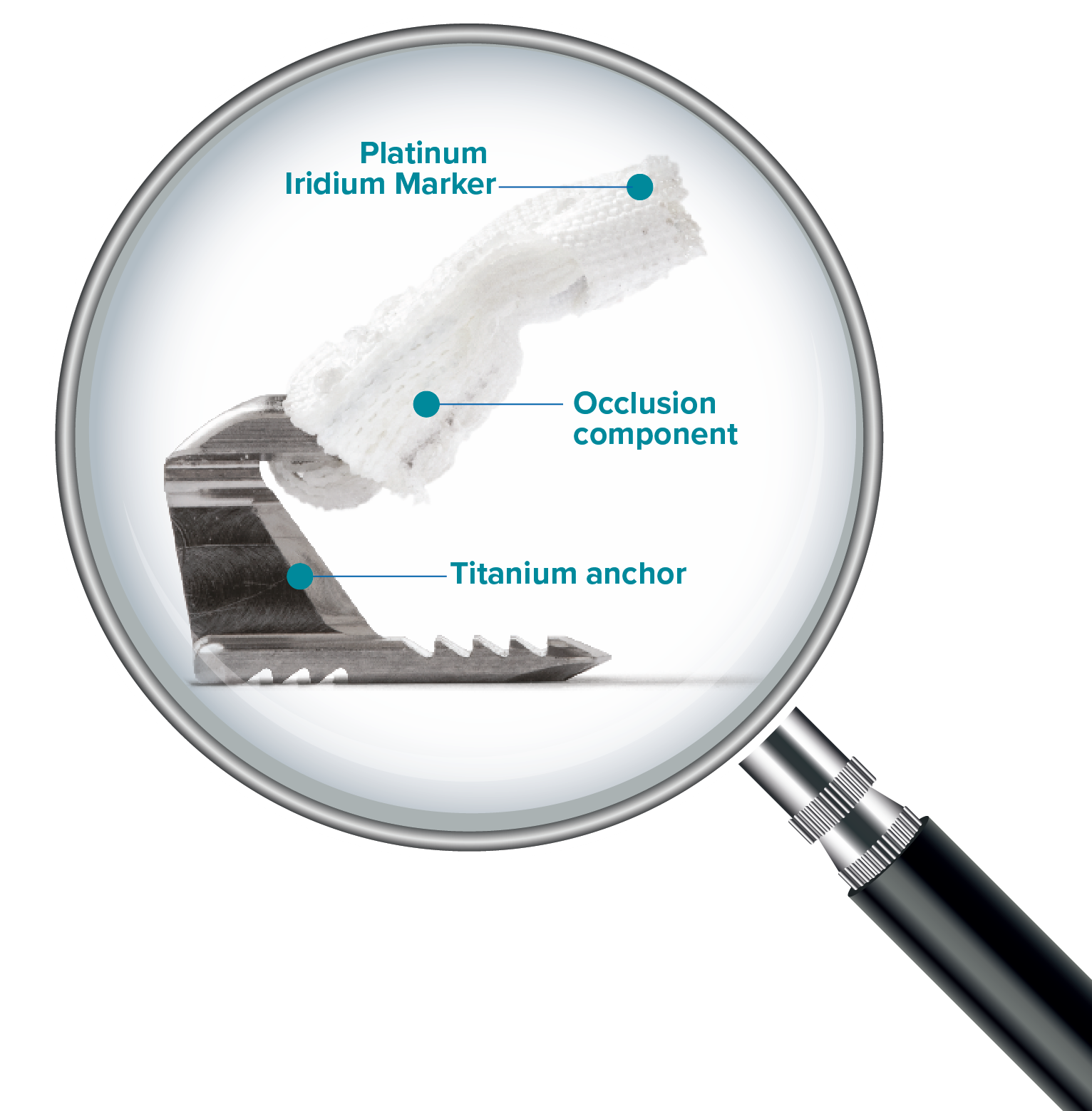
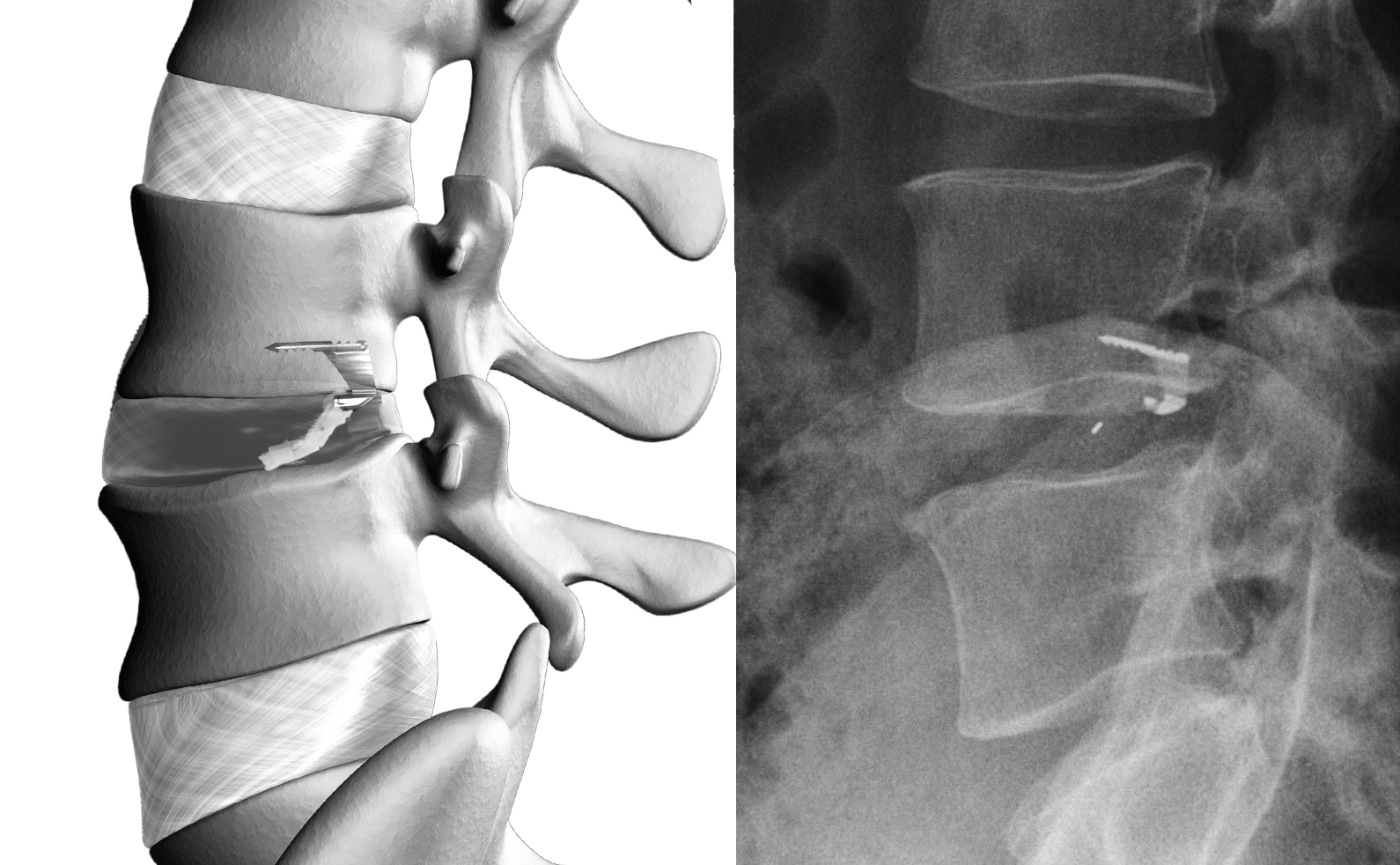
Barricaid is a small implant, slightly larger than a pencil eraser that is designed to plug the larger holes in the disc wall. It is made up of a titanium bone anchor which secures the polymer plug into the disc space to repair and reconstruct disc wall. Barricaid has been shown to reduce the need for a second operation by 81%1.
What do surgeons do with a hole left in the discectomy?
The current discectomy standard of care is to not repair the hole in the disc, leaving the patient exposed to the high risk of recurrent herniation and revision surgery if the hole is larger than a pencil eraser. Following surgery, the patient is recommended to avoid lifting or twisting to give time for the hole to scar over before assuming their normal activity.
Why is it important to close the hole after a discectomy?
When a disc herniates, it’s because a hole or weakness has developed in the wall of the disc and the material inside the disc has been pushed out. The surgeon performs the discectomy though this access point. If a large hole is left open, there is a 27%2+ chance of reherniation and the return of pain and symptoms. Barricaid is design to close the hole by creating a barrier against reherniation.
1Some studies outside US indications. Values at minimum 1 year post-op. Minimum study size of 20 Barricaid subjects.
2J Bone Joint Surg Am. 2003 – Carragee, et al
Patient Testimonial
Rachel, a 30-year-old physical therapist and Pilates instructor, struggled with debilitating back and leg pain caused by a significant disc herniation that threatened her career and active lifestyle. After conservative treatments failed, Dr. Paul Kraemer at Indiana Spine Group performed a discectomy surgery with the Barricaid® device, designed to reduce the risk of re-herniation—an especially important consideration given her hypermobility. Following surgery, Rachel experienced immediate relief, regained sensation, and successfully returned to work and the activities she loves, reducing the risk of re-herniation.
Please contact Dr. Kraemer’s office for more information at (317) 564-6833.